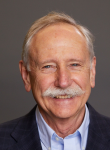
 2025 Recipient:
Walter C. Willet, MD, DrPHRead Bio ▾
Walter C. Willett, MD, DrPH, is Professor of Epidemiology and Nutrition at Harvard T.H. Chan School of Public Health. Dr. Willett studied food science at Michigan State University and graduated from the University of Michigan Medical School before obtaining a Master's and Doctorate in Public Health from Harvard T.H. Chan School of Public Health. Dr. Willett has focused much of his work over the last 40 years on the development and evaluation of methods, using both questionnaire and biochemical approaches, to study the effects of diet on the occurrence of major diseases. He has applied these methods starting in 1980 in the Nurses' Health Studies I and II and the Health Professionals Follow-up Study. Together, these cohorts that include nearly 300,000 men and women with repeated dietary assessments are providing the most detailed information on the long-term health consequences of food choices.
Dr. Willett has published over 2,000 original research papers and reviews, primarily on lifestyle risk factors for heart disease, cancer, and other conditions, and has written the textbook, Nutritional Epidemiology, published by Oxford University Press, now in its third edition. He has also written four books for the general public. Dr. Willett is the most cited nutritionist internationally. He is a member of the National Academy of Medicine of the National Academy of Sciences and the recipient of many national and international awards for his research.
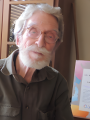 2022 Recipient:
Henry Blackburn, MD, MSRead Bio ▾
Dr. Blackburn was a young medical resident at the University of Minnesota in the 1950s when he applied for a research fellowship in Dr. Keys’ laboratory, beginning a remarkable career spent revealing the effects of lifestyle factors such as diet on heart health. From 1957 to 1972, Dr. Blackburn served as Project Officer of the Seven Countries Study, the first study to systematically examine the relation between lifestyle, diet and rates of heart attacks and strokes on different populations. He also participated in the 50-year mortality follow up.
In a recent interview with ACLM, Dr. Blackburn recalled meeting Dr. Keys, who had recently returned from a field trip to the Italian island of Sardinia, where heart disease was reportedly almost nonexistent. Dr. Keys and his team were researching what cultural differences contributed to differing rate of heart attacks, which at the time were responsible for every second death in the United States.
“Their holy grail was to find out what in the culture might be responsible for those differences,” Dr. Blackburn said. “I found this very interesting and very exciting – and important.”
Dr. Blackburn also developed risk prediction using the resting and exercise electrocardiogram and participated in the design and analysis of physical activity trials, as well as the Coronary Drug Project, a large clinical trial assessing various treatments for coronary heart disease in men. He led population strategies of surveillance and preventive interventions in the Minnesota Heart Survey and the Minnesota Heart Health Program. After retiring in 1996, he created and continues to manage a website focused on the history of cardiovascular disease epidemiology.
“During his esteemed career, Dr. Blackburn has been at the center of groundbreaking research that has defined the relationship between lifestyle and heart disease,” said ACLM Past President Cate Collings, MD, MS, FACC, DipABLM. “Poor overall diet quality remains the single leading cause of premature death in the United States today. The American College of Lifestyle Medicine is proud to honor Dr. Blackburn for his lifetime commitment to demonstrating the importance of addressing diet if we are ever to reverse the trajectory of the U.S. epidemic of chronic disease.”
 2019 Recipient:
Pekka Puska, MD, PhDRead Bio ▾
Professor Puska was the Director General of the National Institute for Health and Welfare in Finland (THL) 2009–2013. Recently (2017-2019), he served as a Member of the National Parliament of Finland, including the Health and Social Affairs Committee and the Education Committee of the Parliament. Professor Puska continues also his affiliation with THL. THL is a comprehensive national institute for public health and welfare under Ministry of Health in Finland. It covers a broad range of health and welfare issues, from disease prevention, nutrition, lifestyles and environment, infectious disease control, and national vaccination programs to health and social services, health and welfare monitoring, and statistics. THL was formed after a merger of the National Public Health Institute (KTL) and the National Research and Development Centre for Welfare and Health (Stakes), and started its work in January 2009. Before THL Professor Puska was the Director General of KTL (2004-2008).
Professor Puska has, for most of his career, worked at KTL/THL. He was, for 25 years, the Director and Principal Investigator of the North Karelia Project: prevention of cardiovascular diseases in North Karelia and later on in all of Finland. Within 25 years, there was an over 80% decline in annual heart disease mortality among the working-age population, and a dramatic general improvement in public health took place. The project is widely seen as a model for successful population-based prevention of cardiovascular and other non-communicable diseases (NCD).
In 2001-2003 Professor Puska served as the Director for Non-communicable Disease Prevention and Health Promotion at the World Health Organization Headquarters in Geneva. At WHO, Pekka Puska directed the work on integrated prevention of NCD, targeting the main risk factors (tobacco, unhealthy diet, and physical inactivity) through health promotion, national programs, policy measures, and regional networks. Professor Puska’s Department was the focal point of this work that culminated in the adoption of the Global Strategy on Diet, Physical Activity, and Health by the World Health Assembly in 2004. Recently (2015-16) he chaired the Independent Expert Group for the Impact Assessment of the WHO/FCTC.
Professor Puska has, internationally and domestically, served in a number of scientific, expert and public health functions, WHO’s work, multinational projects, international conferences etc. He has over 500 scientific publications. Internationally, Professor Puska is the past President of the International Association of National Public Health Institutes (IANPHI). He has also served as the Chair of the Governing Council of the WHO International Agency for Cancer Research (IARC) and as the President of the World Heart Federation.